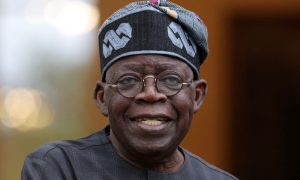
President Bola Ahmed Tinubu’s administration is yet to provide further clarification on the promised nationwide reduction in transportation fares, as many Nigerians continue to await the broader impact of the initiative.
Recall that President Tinubu, at a meeting with state governors on August 27, said more Nigerians should begin to see measurable reductions in transportation costs from October 1.
Tinubu had said the reduction would be achieved through the National Affordable CNG Transit Programme, leveraging the Presidential Initiative on Compressed Natural Gas and Electric Vehicles (Pi-CNG & EV).
He also directed the rollout of an additional 500 CNG refuelling stations nationwide as part of efforts to reduce transportation costs.
However, more than five days into October, the broader impact of the promised reduction remains limited, with transportation costs still high in many parts of the country.
When DAILY POST contacted presidential spokesperson Sunday Dare on Monday, he had yet to respond at the time of filing this report.
Meanwhile, the opposition leader of the African Democratic Congress (ADC) and former Vice President, Atiku Abubakar, had questioned the Tinubu administration over the promised reduction in transportation fares.
However, the Executive Chairman of the Presidential Initiative on Compressed Natural Gas and Electric Vehicles (Pi-CNG & EV), Ismaeel Ahmed, said the reduction in transportation costs had already begun on some routes.
Ahmed said on September 30 that commuters using CNG-powered buses on some routes could pay significantly less than those using conventional commercial transport. He cited the Gwagwalada-Abuja route, where he said commuters could pay about 40 per cent less.
DAILY POST reports that despite the CNG initiative being implemented by the Federal Government across various states, transport fares have remained elevated, with fuel prices standing between N1,370 and N1,410 per litre in Abuja and its environs.
Diesel retails at between N1,940 and N2,000 per litre, depending on the location in Nigeria.
While fuel prices have recorded a reduction of between N20 and N25 per litre, retail prices of N1,370 and N1,410 per litre remain elevated amid crude oil prices of about $100 and $89 per barrel for Brent and West Texas Intermediate (WTI) crude blends, respectively.
Reacting to the development in an interview with DAILY POST, the Country Director of Transparency International Nigeria, Auwal Rafsanjani, said the problem was poor public accountability among Nigerian leaders.
According to him, public officials often make pronouncements and promises that are never fulfilled.
“You know, the problem is that public accountability is very poor in Nigeria.
“So public officials will always make a promise and commitment and they will never fulfil. And that is why, unfortunately, Nigerians are not having trust in their leaders. Because when their leaders say something, they hardly implement it.
“So the mechanism to make those things happen has not been put in place before the pronouncement. Just like the withdrawal of the subsidy, there was no mechanism to mitigate the issue. And then the president just made that pronouncement.
“And this is the same pattern with this one now. Now we have raised expectations of Nigerians and they have not seen anything.
“So they will continue to think that public officials are liars, deceivers.
“There is no need to rush to make a pronouncement when you know you are not ready,” he told DAILY POST.