As Reported,
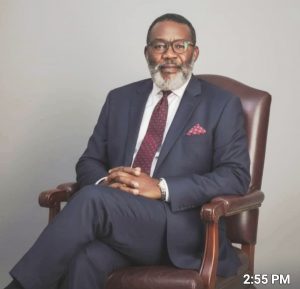
Former Federal Commissioner/Ombudsman in the Public Complaints Commission Nigeria and immediate past Chief Technical Adviser to the Government of Imo State on Environment, Barr. Chief Willie Amadi, says there is a hopeless and total loss of confidence by the common man in the Nigerian judicial system.
This is even as Barr. Amadi opined that the situation could also be blamed on the prevailing and increasing daily hardship in the country due to unabated bad governance by both the political class, civil servants, and businessmen doing business with governments at all levels.
The London- and Nigeria-trained legal practitioner, former Special Adviser on Sanitation & Transport and pioneer General Manager of Imo State Environmental Transformation Commission, under which his Clean & Green initiative won the cleanest state capital award in the country three consecutive times, regretted that the deliberate and sustained diminishing of the powers of critical regulatory institutions such as the EFCC, Code of Conduct Bureau, Police, INEC, and—most unfortunately—the once revered Judiciary by the political class amounts to the burial program of our great nation. These institutions have now become lame ducks and totally subservient to the whims and caprices of the ruling class and foreigners with vested interests in our mineral and natural resources.
Amadi, an environmentalist who recently unveiled his second book, “The Ombudsman and Justice Delivery in Nigeria: Challenges and Prospects,” expressed shock that our apex court, which is today on serious trial, has turned into “the main hope of corrupt men and no longer the last hope of the common man.”
He further lamented that the prevailing “lack of consequences” syndrome has given today’s power brokers and nouveau riche the impetus to recklessly breach the law with impunity because their actions are now condoned by the judiciary, going by the avalanche of negotiated, scary, and shameless judgments delivered without any shade of justice component. This ugly development has not only scared foreign investors but has also discouraged citizens from seeking redress through the courts. Barr. Amadi warned that forcing citizens into self-help may be a dangerous path with dire consequences if care is not taken. “A stitch in time,” he advised, “will save nine.”
Barr. Amadi also wondered if the rich leaders in power today have noticed that “temperatures” are rising daily on the streets and could trigger a sudden mob reaction from the poor masses. He warned that immediate enthronement of good governance, rule of law, and protection of citizens’ rights remains the only escape route for the near future.
On whether it is imperative to restructure the Nigerian judiciary, the National Assembly, and the country, Amadi regretted that both arms of government have been dangerously compromised and bought over by the Executive. He emphasized that only strong institutions—not restructured sub-nationals—can guarantee good governance. He cited the powers of the police and courts in the United States and the recent Executive Orders of the POTUS as examples.
On rising insecurity in Nigeria, he recalled the insurgency, sponsored criminality, and unreported genocide against Christians from 2015 till date, which led the United States to designate Nigeria as a “Country of Particular Concern.” He traced the situation to the sabotage of the Jonathan administration through the Chibok girls saga, which later escalated under President Muhammadu Buhari due to open-border policies. According to him, Buhari’s failure to manage the crisis worsened insecurity and encouraged massive looting of national wealth.
He stated that President Bola Ahmed Tinubu inherited these problems and may now be paying for the political conspiracy that removed Jonathan from office. On Donald Trump’s recent threat of military intervention in Nigeria to stop genocide and flush out terrorists, Barr. Amadi advised the Nigerian government to leverage the situation and request a U.S. military base to stabilize the Sahel region.
On the Imo Charter of Equity, the Owerri-Nchise-born socialite and clan High Chief expressed optimism that an Owerri Zone governor will emerge in 2027. He announced his retirement from active partisan politics on his 65th birthday (November 30, 2027), although he would continue to serve as Chair of the Social Media Subcommittee of the Imo Harmony Project during the transition period.
Barr. Amadi, a scholar and doctoral candidate in Law, said he will focus on research, writing, and teaching post-2027.
…